Dryer Vent Service You Can Trust West Palm
Want reliable West Palm Beach dryer vent cleaning experts? We offer secure, code‑compliant airflow with HEPA‑contained extraction, rotary brushing, and instrumented verification. You'll experience reduced drying times, reduced fire risk, and improved indoor air quality in our coastal humidity. We meticulously assess run length, elbows, materials, and termination per NFPA 211/IMC, then record pre/post CFM, static pressure, temperature rise, and photos. We repair crushed flex, secure joints with UL foil tape, and verify damper function. Learn about how we demonstrate measurable improvements today.
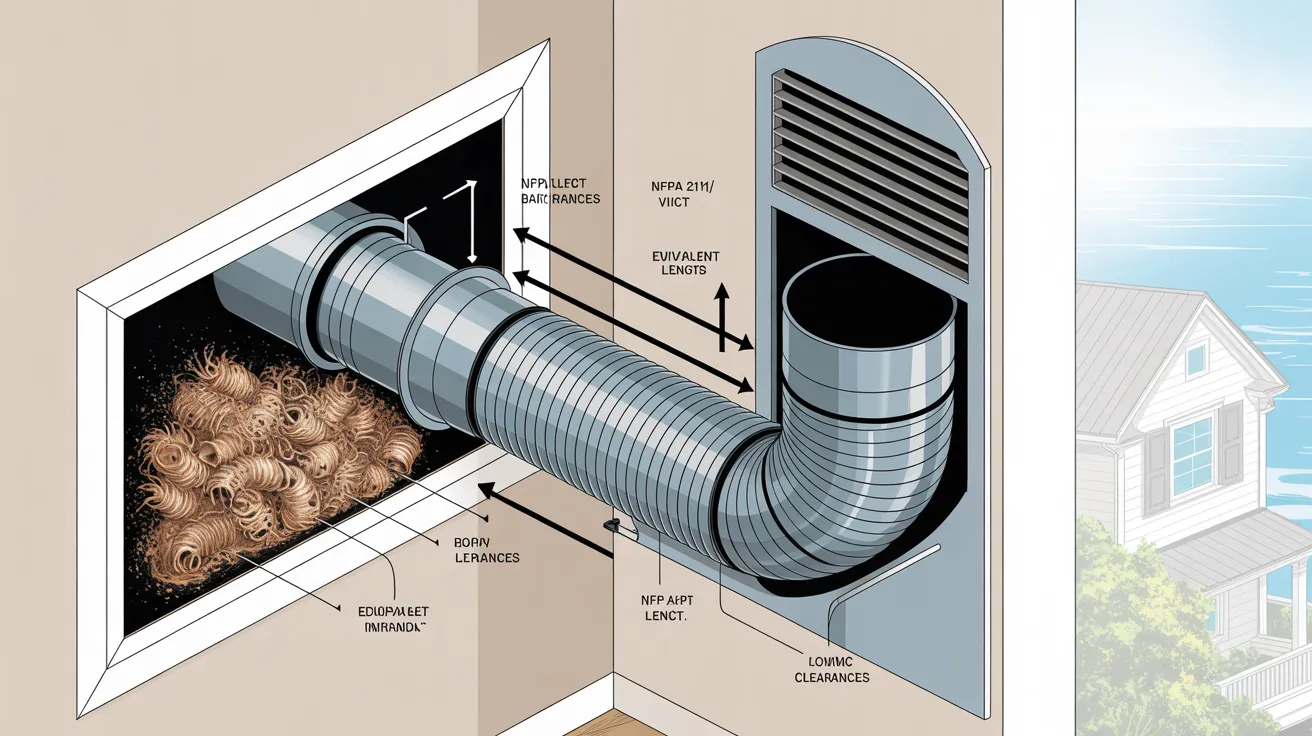
Key Takeaways
- Licensed dryer vent experts serving West Palm Beach, enhancing fire prevention, air quality indoors, and power efficiency according to NFPA 211 and manufacturing guidelines.
- Complete cleaning: offering rotary brushing, HEPA negative-pressure capture, termination hood cleaning, and UL-2158A compliant repairs and sealing.
- Comprehensive diagnostic verification featuring airflow measurements, static pressure testing, thermal performance testing, and motor amp readings; accompanied by before and after imagery and detailed test results.
- Quick response needed for signs of trouble: excessive drying times, hot cabinets, unpleasant odors, poor exterior ventilation, or activated thermal protection devices.
- Oceanfront-optimized services to combat environmental risks from humidity and corrosion; delivering professional maintenance programs for homes, condo associations, and business facilities.
The Importance of Dryer Vent Cleaning in West Palm Beach
Because lint collection is a leading cause of residential fires, regular dryer vent cleaning in West Palm Beach is an essential safety measure that minimizes fire hazard, enhances airflow, and keeps equipment according to manufacturer and NFPA 211/CSA C22.1 standards. You'll also safeguard wiring, terminations, and junction ducts from thermal strain and backpressure. By removing obstructions, you reestablish design static pressure, enhance exhaust movement, and lower cycle times, improving energy efficiency and maximizing motor life.
When dealing with humid coastal environments, you need effective humidity management in your laundry space. Clean vents efficiently remove moisture-laden air, helping prevent moisture damage, mold development, and metal corrosion. Professional duct cleaning services verify correct duct installation requirements, including smooth-wall metal construction, properly sealed joints, and proper termination clearances, while validating precise gas and electrical connections and damper functionality. You'll achieve safe, code-compliant operation throughout the year.
Critical Signs Your Dryer Vent Needs Urgent Attention
If your dryer exhibits signs of heat stress, airflow problems, or electrical/gas issues, treat these as warning signs that demand quick action. Should the dryer's surface or door become extremely hot, this may indicate a blocked exhaust duct. Longer-than-normal drying periods suggest reduced airflow and pressure issues in the vent configuration. Unpleasant mustiness suggests dampness accumulation from insufficient airflow. The appearance of lint near the exterior vent, non-functioning vent flapper, or damaged flexible ducting all signal flow restrictions.
Monitor a weak exhaust flow at the termination, a tripped thermal fuse, or continuous switching on the high‑limit thermostat. Heat discoloration, rattling ducts, or loose elbows point to improper support or fasteners. When you observe the gas burner short‑cycling or detect erratic amperage, immediately shut down the unit and schedule a vent inspection.
Indoor Air Quality and Fire Safety Advantages
While a dryer may seem like a routine appliance, the ventilation system creates a substantial fire danger if lint accumulates or air movement decreases. You can reduce fire risks by maintaining proper duct dimensions, installing metal connectors, and installing regulation-compliant termination points. Proper airflow reduces check here heat buildup, enhances smoke prevention, and decreases dangerous lint accumulation. Additionally, you protect residents from carbon monoxide exposure if gas dryers maintain proper ventilation and connections stay sealed.
Clean ducts improve interior air quality. Efficient air filtration at the appliance and free-flowing exhaust promote allergen elimination by capturing debris, allergens, and particles instead of recirculating them. Managed exhaust improves humidity regulation, minimizing dampness problems and wall cavity condensation. Shorter cycles mean decreased thermal stress, increasing fabric longevity. Following NFPA 211/54 clearances and UL-listed components ensures safety and efficiency.
Our Professional Dryer Vent Cleaning Procedure
The process begins with a comprehensive inspection and code compliance check to detect ventilation obstructions, duct damage, and exhaust issues. We proceed with controlled lint and debris removal through appropriate agitation and vacuum collection to avoid spreading. In conclusion, we validate performance through calibrated airflow measurements and record that ventilation efficiency satisfies both manufacturer guidelines and local regulations.
Evaluation and Inspection
Prior to starting any work, our technicians perform a comprehensive inspection and building code assessment to document baseline conditions and detect potential hazards. We initiate with a visual examination of the flex hose, vent route, termination hood, and spacing to confirm UL-listed components, appropriate routing, and secure connections. We validate duct composition, length, and equivalent elbows against manufacturer specifications and Florida Building Code requirements.
We assess airflow levels, static pressure readings, and backdraft damper performance to detect blockages or incorrect termination. We conduct moisture testing at the lint screen, coupling, and exterior vent to detect water buildup or compromised ducting. We inspect combustion air intake, exhaust spacing, and electrical bonding. You'll get detailed findings, safety priorities, and code-compliant solutions before continuing with repairs.
Cleaning Lint and Debris
Once we've recorded initial conditions, we advance straight into cleaning out lint and debris using techniques tailored to your vent system's requirements. We first disconnect the power supply, safeguard the appliance, and set up professional HEPA filtration to establish negative pressure. You'll watch us use mechanical brush systems or air-whip agitation sized to the duct diameter, thoroughly clearing built-up dryer lint and vent debris without stressing connections or flex ducting.
We start at the termination to the unit, meticulously clearing junction points, elbows, and seams, then performing antistatic vacuum cleaning to prevent debris re-entrainment. We document and securely bag all removed material for your records. We service the damper, termination hood, and protective screen, maintaining smooth functionality. Finally, we inspect and secure mounting clamps, verify set screws, and upgrade all nonconforming junction materials with components meeting UL-2158A standards.
Testing and Verifying Airflow
Verify efficiency through instrumented airflow measurement. After clearing away debris, you must verify system performance utilizing calibrated testing equipment including anemometers, manometers, and hygrometers. Set baseline measurements at the exterior outlet with the dryer connected and running on a timed cycle. Log static pressure, air speed, and flow rates. Cross-reference the readings against OEM specifications and ACCA/ASHRAE standards to verify safe function.
Perform pressure measurements at critical areas including the appliance collar, connector hose, inline fittings, and exterior hood. Identify unusual pressure decreases that indicate residual restriction, damaged flex, or backdraft damper issues. Verify that exhaust velocity successfully eliminates lint while remaining under code requirements for flex duct.
Record temperature and humidity measurements to help understand performance results. Should targets fall short, implement suitable remedial steps. Conclude by adding testing information to maintenance files for compliance purposes and future reference.
Advanced Tools and Methods We Use
While each home is distinct, we employ a systematic set of tools to clean thoroughly vents and adhere to code. You get a detailed approach that emphasizes fire safety and efficient airflow. We commence with mechanical assessment to chart the full duct system, check elbows, and locate constrictions without removing finishes. Subsequently, we implement thermal imaging to spot hidden heat anomalies showing lint accumulation, compressed flex, or loose joints.
Our team employs mechanical brush systems sized according to duct diameter, then collect debris using HEPA-filtered negative pressure to prevent indoor re-entrainment. In code-compliant areas, we deploy flexible cleaning heads for delicate areas and nylon extensions for solid metal sections. We track motor amperage, verify backdraft damper performance, and reinforce joints applying UL-listed foil tape, instead of conventional duct tape, ensuring long-lasting, code-compliant outcomes.
Complete Solutions for Homes, Condominiums, and Business Locations
We provide tailored residential services that align with duct length, material, and appliance specifications while meeting NFPA 211 and manufacturer standards. For condominium units, we manage access arrangements, document findings, and comply with HOA bylaws and local fire code to maintain shared shafts and booster fans up to code. Commercial clients get professional maintenance programs with periodic cleaning, airflow benchmarking, and comprehensive reports to meet OSHA expectations and AHJ reviews.
Personalized Home Solutions
Created particularly for various living spaces, our specialized residential dryer vent systems tackle the specific compliance needs, airflow considerations, and access challenges found in single-family homes, condos, townhomes, and mixed-use properties. We begin with an extensive inspection aligned with NFPA 211 and IRC protocols, examining system components including ducts, elbows, termination points, and materials. Subsequently, we eliminate lint and blockages using professional rotary brushing and HEPA-contained negative pressure to return to manufacturer-specified performance levels.
We maximize energy efficiency by verifying vent run geometry, addressing crushed flex, sealing joints with UL-listed foil tape, and calibrating proper backdraft damper tension. You'll receive documentation: comprehensive data including airflow measurements, amp readings, temperature changes, and visual documentation. For West Palm Beach humidity, we suggest seasonal scheduling ahead of peak dryer use, guaranteeing safe operation, faster dry times, and reduced wear.
Condominium Association Guidelines
Due to multi-unit properties concentrate risk, our condo association compliance program synchronizes dryer vent operations with NFPA 211, NFPA 70 (NEC), and the International Residential/Mechanical Codes, plus your bylaws and insurance requirements. We establish uniform scope, access protocols, and documentation to satisfy association requirements while minimizing resident impact.
We commence with safety evaluations of common shafts and in-unit ducting, verifying construction materials, duct length, endpoints, backdraft dampers, and makeup air. You'll receive deficiency lists prioritized by hazard, photo evidence, and corrective action plans. Our specialists eliminate obstacles, eliminate unauthorized flexible ducting, secure junctions using approved materials, and establish maintenance schedules relative to building capacity and debris levels.
We record and timestamp all reports, track and monitor unit participation, and provide detailed proof-of-service documentation for insurance providers, regulatory boards, and fire safety inspectors.
Commercial-Grade Maintenance Programs
As fire danger grows with lint accumulation and usage time, our professional maintenance solutions establish dryer vent upkeep for homes, condos, and businesses under the same code-compliant framework. You'll benefit from NFPA 211/54-aligned assessments, airflow measurements, and recorded cleaning schedules matched to occupancy and utilization.
We implement maintenance agreements that outline scope, frequency, and response SLAs, helping you prevent unplanned downtime and citations. Our skilled technicians examine appropriate ducting components, termination, and damper performance, then evaluate pressure levels and air flow to validate design performance. We remove blockages, reseal joints, adjust building stacks, and replace unsafe flex with rigid metal where required.
You'll get timestamped reports, initial and final readings, and intervention records-essential documentation for insurance requirements, regulatory evaluations, and committee reviews.
Recommended Frequency for Dryer Vent Maintenance
It's advisable to book professional dryer vent cleaning at least once every 12 months, or more frequently if usage is heavy (multiple loads daily), your vent ducting is extensive, or you spot warning indicators like increased drying duration, excessive lint, or the smell of burning. In West Palm Beach's humid climate, lint can absorb moisture, cling to duct walls, and limit air circulation faster, so don't forget to keep up with yearly maintenance. Adjust scheduling to usage levels: quarterly for salons, spas, or large families; semiannual for moderate users; annual for light usage.
Configure routine inspection alerts at the start of dryer season and hurricane season to inspect airflow performance, vent flap operation, and transition duct integrity. Be sure to check external ventilation gaps, bird guard status, and confirm that ventilation conforms to recommended CFM requirements and regional regulations.
Complete Pricing Information and Inclusions
Once your service interval is established, you'll understand exactly what you're paying for. We provide clear cost projections before any work begins, with scope defined by vent length, wall or roof exit points, and code-access constraints. We specify automated cleaning methods, contained HEPA extraction, ventilation assessment, air volume measurement (pre/post CFM), and termination cap cleaning. If needed, we document bird barrier replacement and approved connector modifications.
Select from flat rate options for standard single-run systems, or opt for service bundles that include lint alarm installation, cleaning, and airflow balancing. We document all findings with compliance documentation, photos, and static pressure readings. Our comprehensive invoices specify labor, materials, access fees, and any roof-safety surcharge. No hidden costs - additional work (rerouting, repairs, or remediation) demands your written approval before beginning.
Customer Reviews and Local Success Stories
Since outcomes matter more than guarantees, our customers showcase quantifiable gains: reduced dry times, confirmed airflow improvements, and post-clean static pressure returning to code-acceptable ranges. In Customer testimonials, you'll discover measured results: cycles accelerated by 30-50%, fans restored to factory specifications, and lint accumulation decreased to safe levels. You benefit from procedures following NFPA 211 standards, UL-certified parts, and verified ventilation enhancements.
Local milestones feature residential buildings in West Palm Beach clearing HOA safety audits after addressing damaged flex runs and faulty terminations. Safety inspections show significantly fewer dryer-fire risks where we've resolved airflow restrictions and reestablished backdraft damper performance. We provide before/after meter data, images, and maintenance intervals. This detailed reporting assists you with filter maintenance, track energy use, and ensure code compliance.
Frequently Asked Questions
Do Your Technicians Have Licenses, Insurance, and Background Checks?
Yes. Our team includes qualified technicians who follow state and local codes, maintain current certifications, and adhere to manufacturer specifications. We carry full liability and workers' compensation insurance for your safety. We conduct thorough background checks and regular safety training, encompassing lockout/tagout, confined space awareness, and NFPA 211/IMC compliance. We log procedures, check clearances, and evaluate airflow and termination integrity. We deliver detailed reporting, chain-of-custody for keys, and visually documented results.
Do You Provide Emergency and Same-Day Dryer Vent Solutions?
Absolutely, you can request same-day or emergency dryer vent assistance. We immediately address dangerous conditions, clogged venting, and dryer overheating with emergency bookings and same-day response. We provide a comprehensive evaluation, ventilation testing, and vent maintenance to manufacturer specs. We confirm ventilation components, vent terminations, and spacing requirements, and record results. We'll provide complete inspection results, photos, and maintenance advice, with quality assurance and completion confirmation.
Are You Able to Service High or Hard-To-Access Exhaust Vents?
Absolutely, we handle elevated and challenging ventilation endpoints. You receive technicians trained for rooftop access, fall protection, and confined-space procedures. We deploy anchor points, ladder stabilizers, and OSHA safety protocols. We inspect termination caps, backdraft dampers, bird guards, and clearances. We employ rotary brushing, HEPA vacuums, and camera inspections to ensure full airflow. You'll obtain comprehensive reports, visual documentation, and flow measurements. As required, we replace damaged caps and seal penetrations to manufacturer specs.
Will My Dryer's Warranty Be Affected by Cleaning?
Professional dryer cleaning won't invalidate your manufacturer's warranty. As an example: during annual cleaning service, a certified technician cleans out lint accumulation, improves air circulation, confirms proper temperature operation, and records the service details. Such records strengthen warranty coverage by showing responsible maintenance practices. Be sure to hire qualified technicians who adhere to NFPA 211 standards and factory specifications, prevent unauthorized component removal, and get comprehensive service records including images and invoices. Technicians will note any pre-existing issues before work begins to safeguard your warranty.
Can I Get Before-And-After Reports for Airflow and Lint Volume?
Absolutely. We provide comprehensive airflow measurements and a thorough lint assessment following our service. We measure pre- and post-cleaning CFM measurements (CFM) using specialized testing devices and track static pressure changes. When examining lint, we calculate mass and quantity, identify combustible buildup, and photograph findings. Documentation covers vent path conditions, code-compliance observations, and safety guidelines. You'll see detailed, verifiable improvement data to help with maintenance planning and insurance or property management documentation.
Conclusion
Safety, efficiency, and code compliance are priorities you value - and so do we. The fire risk from lint accumulation is significant; the U.S. Fire Administration documents nearly 2,900 dryer fires per year, with most beginning in clogged vents. Consider a vent packed like a felt blanket limiting airflow and leading to dangerous temperature increases. Proper servicing can reduce fire risk, enhance IAQ, and meet manufacturer and NFPA 211 standards. Be sure to schedule periodic service, record findings, and verify airflow and termination. These steps will protect your property, decrease energy usage, and keep your system stays within specifications.